Oh, the world of visual design is just buzzing, isn’t it? As someone who’s spent years immersed in the creative trenches, leading teams through countless projects, I can tell you firsthand that navigating a group of brilliant, often temperamental, designers is an art form in itself.
It’s not just about delegating tasks; it’s about fostering an environment where innovation thrives, where every pixel counts, and where your team feels truly seen and valued.
Especially now, with so many teams working remotely and the lines between design and AI blurring, how we lead has never been more critical. I’ve personally experimented with various approaches, from daily stand-ups that felt like a chore to breakthrough brainstorming sessions that totally revitalized a project.
My experience has taught me that strong leadership isn’t just about setting deadlines; it’s about igniting passion and helping your team members truly own their craft, ensuring they deliver not just good, but *great* work, every single time.
It’s about empowering them to push boundaries while keeping our collective vision perfectly aligned. Let’s delve into some practical strategies to make your design team shine.
Beyond Deadlines: Nurturing Creative Sparks

Honestly, after years of leading design teams, I’ve come to realize that the traditional “project done by Friday” mentality, while necessary for some things, can actually stifle the incredible creativity that we desperately need.
It’s like trying to grow a delicate orchid by just yelling at it to bloom. What I’ve seen work, time and time again, is creating an atmosphere where designers don’t just feel like cogs in a machine, but rather respected artists and problem-solvers.
This means actively encouraging them to experiment, even if it sometimes leads to a few dead ends. Believe me, those “failed” experiments often pave the way for true innovation down the line.
It’s about letting them explore beyond the initial brief, giving them the space to ask “what if?” and truly dig into a problem before jumping straight to a solution.
I’ve found that when designers feel safe enough to take creative risks, their work isn’t just good, it’s *phenomenal*. They bring a passion to their craft that goes far beyond simply ticking boxes on a task list, and that energy is contagious, elevating the entire team.
This approach isn’t just about output; it’s about building a robust, resilient, and truly innovative design culture.
Cultivating a Safe Space for Experimentation
In my journey, I’ve learned that a truly innovative design team isn’t built on rigid rules and tight constraints, but on a foundation of trust and psychological safety.
It’s about letting designers feel like they can throw out a wild idea, even if it sounds a little bonkers at first, without fear of being shot down. I remember one project where a junior designer proposed a completely unconventional layout that, honestly, seemed totally off-the-wall when she first showed it to us.
Instead of dismissing it, we carved out a small window for her to quickly mock it up. And you know what? While it didn’t end up being the final solution, the discussions it sparked led us to a much more dynamic and user-friendly direction than we would have found otherwise.
That experience taught me that providing a sandbox for experimentation, even on a small scale, not only unearths hidden gems but also boosts team morale exponentially.
When designers know their innovative spirit is valued, they bring their full, authentic selves to the table, and that’s where the magic truly happens.
It’s about building a culture where “failure” is just another stepping stone to breakthrough ideas, not a reason to retreat.
Investing in Growth: Skill-Building That Matters
Let’s be real, the design world moves at warp speed. What was cutting-edge last year might be old news tomorrow. As a leader, I’ve always felt it’s my responsibility, and honestly, my privilege, to ensure my team isn’t just keeping up but staying ahead of the curve.
This isn’t just about sending them to a conference once a year; it’s about a continuous, integrated approach to learning. I’ve personally seen the incredible impact of dedicated “learning Fridays” where team members can dive into new software, explore advanced UI/UX principles, or even just hone their animation skills.
One time, after noticing a gap in our team’s understanding of accessibility standards, we brought in an external expert for a hands-on workshop. The immediate improvement in our designs, and more importantly, the confidence it instilled in the team, was palpable.
It goes beyond just technical skills; it’s also about nurturing their soft skills – presentation, client communication, and even conflict resolution. When you genuinely invest in your team’s professional development, they feel valued, become more versatile, and bring a richer, more informed perspective to every single project they touch.
It’s a win-win: they grow, and so does the quality of our collective output.
The Art of Feedback: Building Bridges, Not Walls
Giving feedback can feel like walking a tightrope, can’t it? For years, I struggled to find that sweet spot between being direct enough to be helpful and gentle enough not to crush someone’s creative spirit.
What I’ve painfully learned is that truly effective feedback isn’t about being right; it’s about fostering growth and open communication. It’s a conversation, not a decree.
When a designer pours their heart and soul into a concept, the last thing they need is a blunt, dismissive critique. Instead, I try to frame it as a collaborative problem-solving session.
“Tell me about your thinking here,” or “What were you hoping this element would achieve?” are my go-to phrases because they invite dialogue. I’ve found that when you approach it this way, designers are much more receptive to hearing alternative perspectives and even identifying areas for improvement themselves.
It’s about guiding them to new insights, rather than just pointing out perceived flaws. This approach transforms what could be a tense moment into a valuable learning opportunity, strengthening not just the design, but also the trust within the team.
Framing Critique as a Collaborative Dialogue
I can vividly recall a moment early in my career where I received some brutally honest feedback that, while technically accurate, left me feeling completely deflated and defensive.
I vowed then and there that I would never make my team members feel that way. So, when it comes to critiquing work, my philosophy has shifted dramatically.
I no longer see it as “me telling them what’s wrong” but rather “us figuring out how to make this even better, together.” Instead of immediately jumping to solutions, I start by asking open-ended questions.
“Could you walk me through your process for this?” or “What challenges did you encounter with this particular interaction?” These questions empower the designer to articulate their vision and rationale, and often, in explaining it, they begin to see areas for refinement themselves.
It’s truly amazing how often simply giving someone the space to talk about their work can illuminate the path forward. This method not only makes the feedback session feel less like an interrogation and more like a supportive discussion, but it also cultivates a deeper sense of ownership and accountability within the designer.
The Power of the Positive Sandwich (and when to skip it)
Ah, the “feedback sandwich” – you know, a compliment, then the critique, then another compliment. For a long time, I swore by it, thinking it was the gentlest way to deliver tough news.
And sometimes, it absolutely works, especially with newer designers who might be more sensitive. It provides that little cushion of affirmation, which is genuinely valuable.
However, I’ve also realized it can occasionally come across as disingenuous or, worse, make the designer brace for the “bad news” hidden in the middle.
I remember a time a designer actually looked relieved when I just directly, yet kindly, shared my constructive thoughts without the preamble, saying, “Thanks for just getting to it, I appreciate the honesty.” That was an eye-opener!
So now, I use it judiciously. If I know a designer is feeling a bit vulnerable or if the feedback is particularly challenging, the sandwich can still be a warm, supportive delivery method.
But for seasoned pros or when the feedback is more about refinement than a fundamental shift, I often opt for direct, clear, and empathetic communication.
It’s all about knowing your team and understanding what kind of “bread” (or no bread at all!) they prefer with their critique.
Navigating the Digital Divide: Remote Design Team Harmony
Leading a design team in today’s blended work environment is a whole new ballgame, isn’t it? The shift to remote or hybrid models has thrown some interesting curveballs our way.
Suddenly, those casual hallway chats that sparked so many ideas are gone, and you’re relying on Slack messages and video calls to convey everything from nuanced feedback to team-building jokes.
I’ve personally wrestled with ensuring everyone feels connected, heard, and aligned, no matter where they’re physically working from. It’s not enough to just give everyone a laptop and a Zoom account; you have to actively cultivate a sense of presence and collaboration that transcends physical distance.
This means being incredibly intentional about our communication channels, scheduling practices, and even how we celebrate successes. I’ve experimented with various tools and strategies, some successful, some not so much, but the core lesson has always been about empathy and understanding the unique challenges each team member faces in their remote setup.
Building this kind of bridge across the digital divide requires more than just tech; it demands a human-centered approach to leadership.
Synchronizing Senses: Tools for Cohesion
In our increasingly remote world, the tools we use have become extensions of our team’s collective brain. I’ve personally tried just about every collaboration platform under the sun, and what I’ve found is that it’s not about having *all* the tools, but having the *right* tools that genuinely foster synergy.
We rely heavily on visual collaboration boards like Miro or Figma’s FigJam for our brainstorming sessions, which mimic the energy of a physical whiteboard session surprisingly well.
For asynchronous communication, Slack is invaluable, allowing quick check-ins and knowledge sharing without the pressure of an immediate response. And for those crucial design reviews, a shared screen on Google Meet or Zoom, coupled with an interactive annotation tool, ensures everyone’s literally on the same page, pointing to the same pixels.
It’s about minimizing friction and maximizing clarity across different time zones and home offices. Investing in these tools isn’t just about efficiency; it’s about maintaining that vital sense of togetherness and shared purpose that can so easily fray when you’re not physically side-by-side.
| Tool Category | Purpose & Benefit for Remote Design Teams | Key Features to Look For |
|---|---|---|
| Visual Collaboration Boards | Facilitates real-time brainstorming, wireframing, and concept mapping, mimicking physical whiteboards to foster creative flow. Keeps everyone visually aligned. | Sticky notes, drawing tools, templates, commenting, voting, real-time cursors, integration with other design software. |
| Project Management | Organizes tasks, tracks progress, manages deadlines, and assigns responsibilities, providing clear oversight for complex design projects. | Task assignment, Gantt charts, Kanban boards, milestone tracking, reporting, integration with communication tools. |
| Communication Platforms | Enables quick messaging, voice/video calls, and file sharing to ensure constant and clear communication across various remote setups. | Channels, direct messaging, video conferencing, screen sharing, file storage, notification controls. |
| Design Handoff & Prototyping | Streamlines the process of sharing designs with developers, creating interactive prototypes, and gathering precise feedback. | Inspect mode, version history, component libraries, interactive prototypes, developer specifications, comment threads. |
Virtual Water Coolers: Fostering Informal Connection
One of the biggest losses in the shift to remote work, for me, was the spontaneous “water cooler” moments – those quick chats about weekend plans or a funny anecdote that truly build team camaraderie.
I quickly realized that if we didn’t intentionally create spaces for these, our team would become purely transactional. So, I started experimenting. We now have a dedicated “non-work chat” channel on Slack where people share pet pictures, cooking fails, or cool design inspirations they stumbled upon.
And every Friday, we have an optional “virtual coffee break” for 15 minutes where work is explicitly off-limits. It sounds simple, but I’ve witnessed these little moments transform team dynamics.
Just last week, I saw two designers who rarely collaborated on projects bond over a shared love for obscure sci-fi films during one of these breaks. It’s these seemingly small, informal connections that weave the fabric of a strong team, fostering trust and making everyone feel less isolated and more like they’re part of a genuine community, not just a group of individuals staring at screens.
Empowering Your Pixels: Ownership and Growth
If there’s one thing I’ve learned over the years, it’s that designers thrive when they feel a true sense of ownership over their work. It’s not just about assigning a task; it’s about entrusting them with a piece of the creative vision and allowing them the autonomy to shape it.
When designers are merely executing instructions, their passion dwindles, and their output often reflects that. But when they’re given the freedom to explore, to innovate, and to truly “own” a feature or a campaign from concept to completion, that’s when their brilliance truly shines.
I’ve seen firsthand how giving a designer the lead on a specific project, even a seemingly small one, can completely transform their engagement and the quality of their deliverables.
It’s like giving them the keys to a really cool car and saying, “Show me what you can do.” This approach not only boosts individual performance but also fosters a culture of accountability and pride, where everyone feels invested in the collective success.
Empowering them isn’t just a management tactic; it’s an investment in their potential and the team’s overall creative firepower.
Handing Over the Reins: Trust and Autonomy
I still remember the butterflies I felt early in my career when my manager first truly trusted me with a significant design challenge, giving me the freedom to shape it without micromanagement.
That feeling of trust was incredibly motivating, and it’s something I strive to replicate for my own team. Giving designers genuine autonomy isn’t about simply delegating; it’s about explicitly saying, “I trust your expertise, your judgment, and your creative vision on this.” It means setting clear objectives and then stepping back, being available for support, but allowing them the space to figure out the “how.” I’ve found that when designers feel this level of trust, they become far more resourceful, proactive, and ultimately, innovative.
They’re more likely to dive deep into user research, explore unconventional solutions, and present work they’re truly proud of because it feels authentically *theirs*.
This approach transforms them from order-takers into strategic partners, which is exactly what you want when building a high-performing design team.
Charting Career Paths: More Than Just Promotions

When I first started out, career growth in design often felt like a ladder with very few rungs, mostly just “senior designer” or “design lead.” But I’ve realized that true growth isn’t just about climbing a hierarchical ladder; it’s about expanding skills, influence, and impact in myriad ways.
As a leader, I feel it’s crucial to have open and honest conversations with each team member about their individual aspirations. Perhaps someone wants to specialize deeply in UI animation, becoming the go-to expert.
Another might dream of exploring design systems or user research. My job is to help them identify those paths and then actively provide opportunities to develop those specific skills, whether it’s through mentorship, special projects, or external training.
I recall a designer on my team who expressed an interest in becoming a more effective presenter. We worked together to identify a public speaking workshop, and then I intentionally gave her more opportunities to lead internal design reviews.
The transformation in her confidence and ability was remarkable, and it reinforced for me that true career development is a bespoke journey, not a one-size-fits-all trajectory.
From Vision to Vector: Aligning the Creative Compass
Have you ever been in a meeting where everyone’s nodding along, saying “yes, absolutely!” to the project vision, only to see completely disparate design concepts emerge a week later?
Yeah, I’ve been there too, and it’s frustrating, to say the least. It took me a while to understand that alignment isn’t just about a kickoff meeting and a shared document.
It’s an ongoing, active process of ensuring every single designer on the team understands the overarching goals, the user needs, and the brand identity down to their core.
It’s like being a ship captain; you can have the most talented crew in the world, but if everyone’s rowing in a different direction, you’re just spinning in circles.
My biggest takeaway is that this alignment isn’t achieved through force, but through continuous, open communication, visual references, and a shared understanding of the “why” behind every design decision.
When everyone is truly rowing in sync, the design outcomes are not only cohesive but also incredibly powerful and impactful, truly embodying the collective vision.
Defining the North Star: Crystal Clear Objectives
One of the most critical lessons I’ve absorbed about leading a design team is that clarity is kindness. If the project objectives aren’t crystal clear from day one, you’re basically setting your team up for confusion and rework.
I’ve found that just saying “make it modern and user-friendly” isn’t enough; you need to define what “modern” and “user-friendly” actually *mean* for *this specific project and audience*.
This involves collaborative sessions where we articulate tangible, measurable goals. For instance, instead of “improve navigation,” we might define it as “reduce task completion time by 20% for first-time users accessing feature X.” This gives designers a concrete “north star” to guide their creative decisions.
I’ve seen how this level of specificity empowers designers to make informed choices, defend their rationale, and ultimately produce solutions that directly address the business and user needs.
Without this foundational clarity, even the most brilliant individual designs can miss the mark because they aren’t pulling in the same strategic direction.
Iterative Alchemy: Blending Individual Brilliance
Every designer brings their unique flair, their personal touch, and their individual brilliance to the table, and that’s precisely what makes a design team so dynamic.
However, the challenge, as I’ve often found, is how to blend these diverse creative energies into a cohesive, singular product. It’s less about dictating a uniform style and more about conducting an orchestra where each instrument plays its part beautifully while contributing to a harmonious whole.
We achieve this through what I like to call “iterative alchemy.” It’s a process of constant sharing, early critiques, and building upon each other’s ideas rather than starting from scratch in silos.
During our design sprints, we often have dedicated “concept mash-up” sessions where designers present their initial explorations, and then, as a team, we actively dissect, combine, and refine the strongest elements from different approaches.
This isn’t about compromising individual vision; it’s about leveraging the collective genius to create something far greater than any single person could achieve alone.
It’s a truly organic, living process that celebrates individual contributions while forging a unified and powerful design language.
Decoding Design Dilemmas: Problem-Solving Together
Let’s be honest, not every project is a smooth sail. There are always those gnarly design dilemmas that pop up – technical constraints that seem impossible, conflicting stakeholder feedback that pulls you in opposite directions, or perhaps just a creative block that hits the whole team like a wall.
In my early leadership days, I used to feel the immense pressure to have all the answers myself, to be the “savior” who swoops in with the perfect solution.
But what I quickly learned, often through trial and error (and a lot of late nights), is that the most powerful solutions emerge not from a single brilliant mind, but from the collective intelligence and diverse perspectives of the entire team.
It’s about transforming these roadblocks into opportunities for collaborative problem-solving, where everyone feels empowered to contribute, critique, and co-create the path forward.
When faced with a tough nut to crack, I’ve found that stepping back and facilitating a structured, yet open-ended, team discussion always yields richer, more robust, and more universally accepted solutions.
It’s less about me solving the problem, and more about guiding the team to solve it together.
Brainstorming Breakthroughs: Collective Problem Solving
Whenever my team hits a wall, my first instinct now isn’t to dictate a solution, but to rally the troops for a dedicated brainstorming session. I’ve discovered that true breakthroughs rarely happen in a vacuum; they’re often the result of diverse minds colliding and building upon each other’s initial sparks.
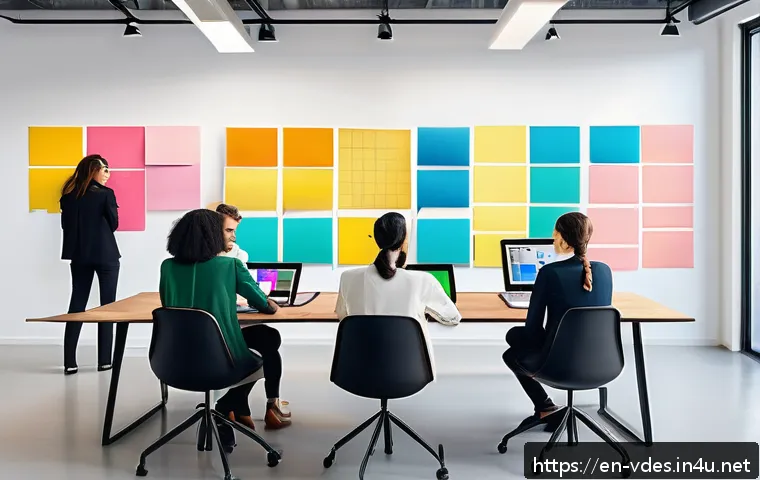
My approach is to create a judgment-free zone where every idea, no matter how outlandish, gets a moment in the spotlight. We use whiteboards, digital collaboration tools, and sometimes even just a pile of sticky notes to get everything out in the open.
I’ve seen some of our most elegant solutions born out of these seemingly chaotic sessions. For example, during a particularly thorny UI challenge, one designer’s seemingly random comment about “making it feel like a flowing river” suddenly clicked with another’s idea about micro-interactions, leading us to an incredibly intuitive and visually appealing animation sequence.
It’s these moments of collective ideation, where one idea organically sprouts another, that truly unlock the team’s creative potential and lead to innovative solutions we might never have stumbled upon individually.
When Conflicts Arise: Mediating with Empathy
Let’s face it, creative differences are inevitable on any design team. When you have passionate, talented individuals, their visions are bound to clash sometimes, and that’s actually a healthy sign of diverse thinking.
However, when those clashes turn into friction, it’s my role to step in, not as a judge, but as a mediator with empathy at the forefront. I remember two senior designers once had a significant disagreement over the aesthetic direction for a major client project.
The tension was palpable. Instead of forcing a decision, I brought them together, not to argue, but to calmly explain their rationale, their user research, and their vision *to each other*.
My focus was on helping them truly *listen* to the other person’s perspective, to understand the “why” behind their stance. It wasn’t about who was “right,” but about finding common ground and a synthesis of their ideas.
By facilitating that open, respectful dialogue, we not only found a solution that incorporated the best of both their concepts but also deepened their mutual respect and understanding.
It’s moments like these that reinforce the idea that resolving conflict isn’t just about problem-solving; it’s about strengthening human connections within the team.
Wrapping Things Up
As we close out our chat today, I hope you’ve felt a bit of a spark, a renewed sense of purpose, maybe even a practical idea or two to bring back to your own team. For me, leading design has never just been about the final product; it’s always been about the incredible people who bring those ideas to life. When we invest in our teams, giving them space to experiment, grow, and truly own their craft, the results are simply astounding. It’s a journey, not a destination, and one I wouldn’t trade for anything.
Useful Information to Know
1. Nurture Psychological Safety Diligently: I’ve seen firsthand that a team’s willingness to innovate hinges on feeling safe. It’s not just about being nice; it’s about creating an environment where everyone genuinely believes they won’t be humiliated or punished for speaking up, asking questions, or admitting mistakes. This means actively encouraging diverse perspectives, embracing errors as learning opportunities, and, crucially, leading by example by showing your own vulnerability. When team members feel secure, open communication and radical ideas flow freely, leading to far more creative and robust solutions than you could ever get from a fearful, quiet group.
2. Master Asynchronous Communication in Remote Settings: The digital workspace demands a different kind of communication strategy. Relying solely on real-time meetings can lead to “Zoom fatigue” and exclude team members across different time zones. I’ve found that investing in robust collaboration tools like visual whiteboards (Miro, FigJam) and project management platforms (Asana, Trello) is vital. More importantly, establish clear guidelines for when to use which channel and encourage detailed documentation. This allows everyone to contribute and stay informed on their own schedule, reducing friction and ensuring clarity without constant, synchronous interaction.
3. Frame Feedback as a Collaborative Growth Opportunity: Let’s face it, giving and receiving feedback can be tough. But I’ve learned that shifting the perspective from “critique” to “collaborative dialogue” changes everything. Instead of just pointing out what’s wrong, ask open-ended questions like, “What were you hoping to achieve here?” or “Could you walk me through your thinking?” This approach empowers the designer to articulate their rationale, making them more receptive to new perspectives and often leading them to identify areas for improvement themselves. It’s about building bridges, not walls, and it significantly strengthens team trust and understanding.
4. Empower Autonomy with Thoughtful Guardrails: True autonomy isn’t about tossing a project over the fence and hoping for the best; it’s about entrusting your team with ownership while providing clear boundaries and support. I’ve found that transparent decision-making frameworks are incredibly effective. Designers need to know when they can make decisions independently and when alignment is crucial. This not only boosts their confidence and problem-solving skills but also ensures that their independent work aligns with the broader project goals. It’s like giving them the keys to a car, but also a map and directions.
5. Embrace Conflict as a Catalyst for Innovation: It might sound counterintuitive, but creative conflict, when managed well, is a powerful driver of innovation. Instead of avoiding disagreements, encourage your team to explore them constructively. I’ve seen some of our most innovative breakthroughs emerge from passionate debates where differing viewpoints force everyone to justify their ideas and consider alternatives. The key is to keep discussions focused on the ideas, not the individuals, and to cultivate active listening. This turns potential roadblocks into opportunities for deeper understanding and more refined solutions.
Key Takeaways
Throughout our conversation, a few core principles have really shone through, and they’re ones I carry with me every day as a leader. Firstly, remember that leadership in design is, at its heart, deeply human. It’s about people, their growth, and their well-being, far more than just processes or pixels. Secondly, continuous learning and adaptability aren’t just buzzwords; they’re absolute necessities in our rapidly evolving industry, for both you and your team. Thirdly, empowering your designers through trust, genuine autonomy, and crystal-clear objectives will unlock their fullest potential. Lastly, fostering open, empathetic communication – even in the face of conflict – is the bedrock of a high-performing, resilient team. By championing these values, you’re not just managing a team; you’re cultivating a vibrant, innovative community that will thrive.
Frequently Asked Questions (FAQ) 📖
Q: How do you keep a remote or hybrid design team connected and creatively aligned, especially when collaboration can feel so different online?
A: This is such a critical question, and one I’ve grappled with intensely since the big shift to remote work! It’s true, that spontaneous “huddle around the whiteboard” energy isn’t as easy to replicate.
What I’ve found really works is being incredibly intentional about creating opportunities for both connection and creative flow. First, over-communication is key, but not just endless meetings.
We use a combination of communication tools like Slack for quick chats and dedicated project management software where everyone can see progress and track decisions.
It’s a central point of truth that keeps us all aligned, no matter our time zones. For true creative alignment, I actively promote virtual brainstorming sessions with tools like Miro or other digital whiteboards.
These tools can genuinely mimic the energy of being in a room together, allowing multiple pointers to go wild as ideas flow. I remember one particularly sticky problem where we used a virtual whiteboard to sketch out dozens of ideas, some truly outlandish (dinosaurs were involved, naturally!), and it broke the creative block beautifully.
It’s about letting go of perfectionism in the initial stages and pushing for quantity. Beyond just tasks, fostering a sense of belonging is paramount.
Since we don’t have those casual coffee breaks, I’ve implemented “creative inspiration” sessions at the start of the week where team members share designs, art, or campaigns that caught their eye.
We also do monthly virtual showcases to celebrate wins and highlight individual contributions. It reminds everyone that we’re a team, united by our passion, even when miles apart.
And honestly, it’s helped some of our introverted designers really shine, giving them a comfortable space to share their valuable perspectives.
Q: With
A: I constantly evolving, how can design leaders ensure their teams stay innovative and relevant instead of feeling threatened by the technology? A2: Oh, the AI conversation!
It’s the elephant in every creative room these days, isn’t it? I completely get why some designers might feel a bit of anxiety. I’ve personally seen that shift from “Wow, cool tool!” to “Is this going to take my job?” But as leaders, our role is to pivot that mindset, to frame AI not as a threat, but as an incredible creative amplifier.
My approach has been to make AI adoption an exciting, experimental journey, not a forced mandate. We dedicate “AI Experimentation Days” once a month where everyone can play with new AI tools – Midjourney, Figma AI, ChatGPT – without any pressure for a “perfect” output.
It’s purely about discovery. I’ve found this low-stakes environment really sparks curiosity. We’ve also organized friendly AI-powered design challenges, which makes learning fun and shows how AI can genuinely enhance, not replace, our human touch.
The real magic happens when you show how AI can automate those repetitive, tedious tasks that drain a designer’s energy – things like resizing, image tagging, or generating initial variations.
By offloading that grunt work, designers have more time and mental space to focus on the truly human aspects of design: empathy, strategic thinking, and complex problem-solving.
I even make a point of incorporating AI into my own workflow, demonstrating how it can speed up prototyping or generate ideas, so my team sees me leading by example.
It’s about choreographing a beautiful dance between human intuition and AI’s speed, making our work richer and more impactful.
Q: What’s your secret to empowering individual designers to truly own their work and push boundaries, ensuring they deliver exceptional results?
A: Ah, empowerment! This is where the real magic happens, in my opinion. I’ve lived through those early career days feeling like a cog in a machine, just sourcing stock photos or tweaking presentations to rigid templates.
It’s soul-crushing, and it’s the antithesis of great design. My “secret,” if you can call it that, is cultivating a deep-seated culture of trust and transparency.
First off, it’s about giving people the full picture. Designers need to understand not just what they’re working on, but why it matters and how it fits into the larger vision.
When you share the overall goals and direction, it allows each team member to align their efforts and find meaningful ways to contribute. This transparency builds a foundation for genuine ownership.
Then, it’s about giving them space to do the work and allowing them to take initiative, even in small ways. Ownership doesn’t mean you dump a huge project on a junior designer and walk away.
It can start with leading research on a new product, taking the initiative on a specific task, or becoming the team’s expert on a new tool. I’ve seen countless times how giving someone that freedom to explore and develop their own ideas, even if it feels a little risky, unlocks incredible potential.
I try to foster an environment where taking “good” risks and learning from “failures” is celebrated, not penalized. It shows them I trust them, and that trust is reciprocated in their passion and dedication to delivering exceptional, boundary-pushing work.